Artist
CERVELLO
Gianluigi Di Franco (vocals, flute, percussion)
Corrado Rustici (guitar, flute, vibes, voice)
Giulio D'Ambrosio (sax, flute, vocals)
Antonio Spagnolo (bass, acoustic guitar, flute, vocals)
Remigio Esposito (drums, vibes)

One of many bands from Naples, and strictly connected
to Osanna, with Corrado Rustici being the younger brother of
that group's guitarist
Danilo. Not unlike Osanna they had a highly interesting fusion of progressive
sounds with typical southern Italy and mediterranean rhythms.
A very good voice/instruments interplay is present
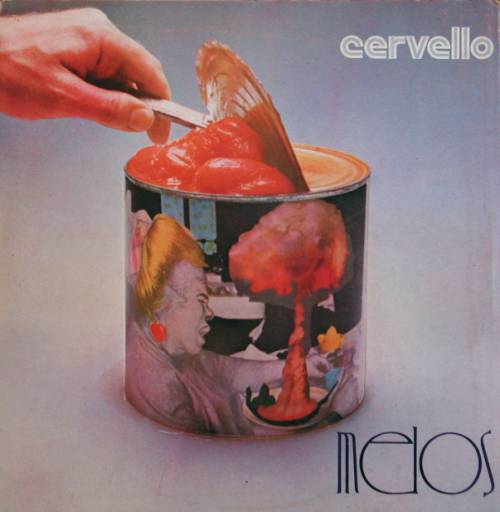
throughout their majestic one and only album, Melos, released on Ricordi in 1973 with
seven long tracks. Their sound is
characterised by acoustic instruments such as flutes and horns (with four of the
five players dealing with flutes) and acoustic guitars, but the album is by no
means an acoustic one, with complex rhythm changes that sometimes resemble the
Lizard-era King Crimson.
The band, formed in 1970 with an early line-up including singer Renato Lori and drummer Pino Prota replaced by Di Franco and Esposito had a successful appearance at "III Festival d'avanguardia e nuove tendenze" held in Naples in June 1973, but broke up in 1974.
Some of the members kept playing, most notably Corrado
Rustici that joined Osanna for their fourth album Landscape of life, played with Uno as live guitarist, was later
in Nova and then had a successful career as solo musician and producer.
Singer Gianluigi Di Franco collaborated with
percussionist Toni Esposito during the 80's also releasing a solo album in 1988, he
never left music and his main activity was in the Music Therapy field until his
death in 2005.
A new line-up of Cervello, with original members Corrado Rustici, Giulio D'Ambrosio and Antonio Spagnolo along with young singer Virginio Simonelli and with Sasà Priore (keyboards, also with Osanna) and Davide Devito (drums), played a one-off concert in Tokyo in July 2017, that was recorded and released as Live in Tokyo 2017.
An unexpected comeback was announced at the end of 2025 with the double album Chaire & Live at Pomigliano d'Arco 1973, with an unreleased vintage live recording coupled with a new studio record with tracks composed between 1974 and 1983 recently recorded by three of the original members (Corrado Rustici, Antonio Spagnolo, Giulio D'Ambrosio) using some vocal parts by the late singer Gianluigi Di Franco.

| LP | |||
| Melos | Ricordi (SMRL 6119) | 1973 | single cover with small can-shaped window opening on the front - lyric inner |
| Contempo (CONTE 002) | 1991 | as above | |
| Sony Music (88843 00482 1) | 2013 | single cover with inner - limited edition of 500 copies on black vinyl and 100 copies on red vinyl | |
| Sony Music/BMG (88985 36553 1) | 2017 | single cover with inner | |
| Ricordi/De Agostini (SMRL 6119) | 2019 | single cover with inner and with 8-page insert - no.35 in the De Agostini "Prog Rock Italiano" series | |
| Sony Music (19439 88741 1 1) | 2021 | single cover with inner - turquoise vinyl | |
| RCA/Sony Music (19802 99073 1) | 2025 | single cover with inner | |
| Chaire & Live at Pomigliano d'Arco 1973 | RCA/Sony Music (19802 99071 1) | 2025 | 2LP - gatefold cover with inners |
CD |
|||
| Melos | Contempo (CONTECD 002) | 1991 | reissue of 1973 album - now deleted |
| BMG (74321-98444-2) | 2003 | as above with mini LP gimmix cover with small window on front - now deleted | |
| BMG (88697-85360-2) | 2011 | as above with mini-LP cover | |
| Ricordi/Mondadori (21) | 2019 | mini-LP gatefold cover with booklet - no.21 in the Mondadori "Prog Italia" series | |
| RCA/Sony Music (19802 99074 2) | 2025 | mini-LP gatefold cover | |
| Live in Tokyo 2017 | Belle Antique (BELLE 172831) - Japan | 2017 | mini-LP gatefold cover |
| Corrado Rustici (CDV 30) | 2019 | CD+DVD version of the above | |
| Chaire & Live at Pomigliano d'Arco 1973 | RCA/Sony Music (19802 99072 2) | 2025 | 2CD - copertina mini-LP apribile |

Not very easy to find despite being released on a major
label like Ricordi, Melos has been reissued by Contempo in early 90's
with an identical design as the original, having an open-up tomato can on the
cover. Under the cover a black & white picture of the band wrapped in
plastic foil. A lyric inner is included.
New vinyl editions were issued since 2013.
No counterfeits were ever made.
The group never received any royalties for the composers rights of the album, because the musicians were underage and couldn't enroll in SIAE. So the album tracks were credited to Marazza and Parazzini, but they were actually composed by Corrado Rustici with help from Antonio Spagnolo and the lyrics by Gianluigi Di Franco.
The album has been reissued on CD in March 2003 by BMG with a mini-LP gimmix
cover reproducing the original and obi, as part of their "Dei di un perduto
rock" series, and later repressed in October of the same year when a second
batch of those CD's came out.
The CD was announced by BMG as being also available with standard jewel case (cat.no.
74321-98443-2) but was probably never issued in this form.
The LP was released in Japan (Seven Seas/King K22P325) with the same gimmix
cover as the original, and in Korea (Seven Seas 61) and Venezuela (Orbe ORLP
4401) with a standard single cover.
CD issues exist, again with miniaturized gimmix cover, made by Si-Wan in Korea,
released in 1999 with catalogue number SRMC 1049 and by BMG in Japan,
released in 2004, with catalogue number BVCM-37426.
The Live 1974 LP, sold in 2015 for a very high price, is a bootleg. The album contained a raw recording of a concert held by the group in Pomigliano d'Arco with Il Rovescio della Medaglia (actually in September 1973), later officially released in 2025 with a better audio quality on the Chaire & Live at Pomigliano d'Arco 1973 double album. Among the tracks on this live album, the instrumental Progressivo remoto had been available for download many years before through Corrado Rustici's site with the title Templi acherontei.
The reunion concert was released on Live in Tokyo 2017, first issued on CD in Japan by Belle Antique (BELLE 172831) with a mini-LP gatefold cover and later as CD+DVD by Corrado Rustici. The latter is dated 2018 on the cover but was actually released in 2019.

|
|
|
Melos - LP |
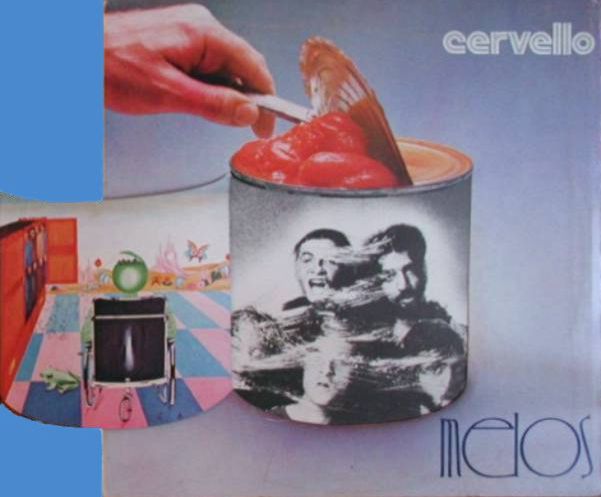 |
| Melos - detail of the gimmix cover |
 |
| Chaire & Live at Pomigliano d'Arco 1973 - LP/CD |
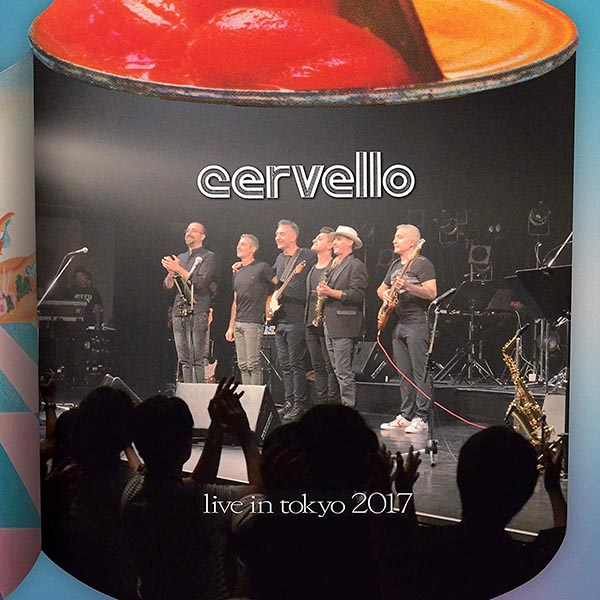 |
| Live in Tokyo 2017 - CD (Japan) |

For more information and to purchase the Live in Tokyo 2017 CD+DVD you can visit guitarist Corrado Rustici's
website www.corradorustici.com
Details of the Live 1974 bootleg and the actual Melos LP composers were told by Corrado on his Facebook page.